
Hair, often considered a symbol of femininity and masculinity—a true crown of glory—plays a vital role in our self-perception and overall well-being. For many, hair loss takes a heavy emotional toll, affecting physical appearance, confidence, and mental health, often leading to anxiety, stress, or even depression. Today, with advancements supported by global organisations such as the International Regenerative Medicine Association, hair restoration techniques have evolved tremendously. From modern transplant methods to regenerative medical approaches, individuals now have access to safer, more effective treatments that restore both hair and confidence.
In this article, let’s understand the psychological impact of hair loss and how hair transplants offer a transformative solution for regaining your appearance and emotional wellness.
The Psychological Toll of Hair Loss
Hair loss—regardless of its cause—can trigger various emotional responses. For many people, it may symbolize aging, poor health, or a loss of masculinity or femininity.
DIMINISHED SELF-ESTEEM
Sudden thinning or a receding hairline can deeply affect mental health, leading to insecurity, self-consciousness, and reduced self-worth. These effects ripple into social interactions, relationships, and overall lifestyle.
NEGATIVE BODY IMAGE
Losing precious hair can distort body image, erode self-esteem, and create dissatisfaction with one’s appearance.
SOCIAL ANXIETY
Fear of judgment or negative comments from others often leads to social withdrawal, avoidance of gatherings, and emotional isolation.
DEPRESSION AND ANXIETY
In severe cases, hair loss contributes to chronic stress, depression, anxiety, and overwhelming emotional distress.
FINANCIAL CONSIDERATION
Beyond the emotional struggles, the hair transplant cost can also cause stress. While some clinics charge heavily, the hair transplant centres offer cost-effective procedures without compromising quality.
Psychological Impact After a Hair Transplant
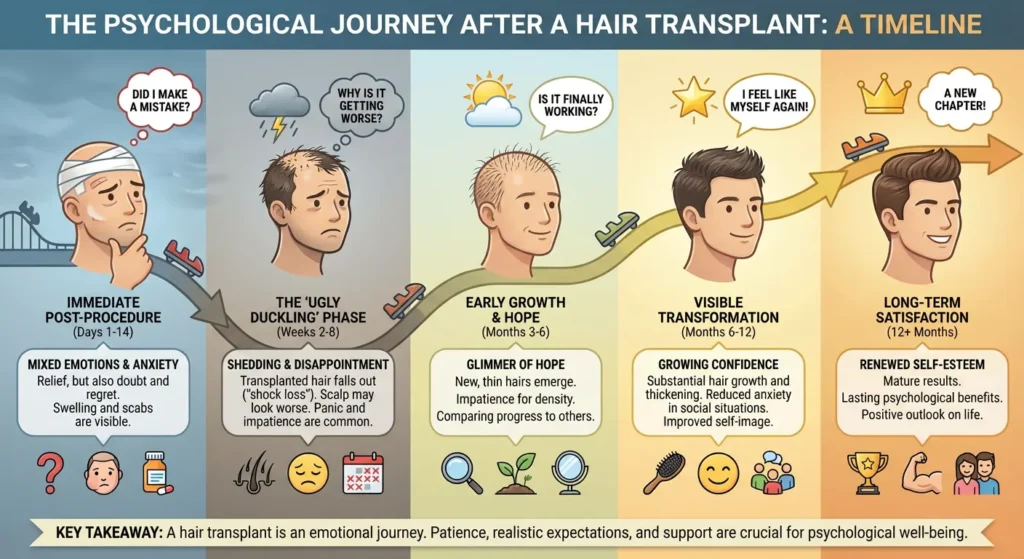
Hair transplant surgery provides a reliable solution for those wanting to restore their hair and confidence. Individuals experience several positive psychological outcomes:
RESTORED SELF-ESTEEM
Regaining lost hair boosts self-confidence and enhances feelings of attractiveness.
IMPROVED BODY IMAGE
A fuller head of hair significantly improves one’s body image and overall satisfaction with appearance.
REDUCED SOCIAL ANXIETY
With restored hair, people feel more comfortable and confident in social situations.
LOWER LEVELS OF DEPRESSION AND ANXIETY
Hair transplant procedures help relieve the emotional distress caused by hair loss.
The Journey: From Hair Loss to Hair Transplant
Deciding to undergo a hair transplant can feel overwhelming. Understanding the psychological stages can help ease the journey.
ACCEPTANCE
Recognising and accepting hair loss—and its emotional impact—is the first step toward healing.
SEEKING SOLUTIONS
Research different treatments, including medical therapies and hair transplants. Consulting qualified professionals is essential, especially those following global standards aligned with organisations like the International Regenerative Medicine Association.
DECISION-MAKING
Evaluate the pros, cons, costs, after-care, and emotional factors involved in the procedure.
POST-SURGERY CARE
Prepare for physical and emotional changes during recovery to achieve the best results.
Benefits Beyond Hair Growth
Understanding the psychological impact of both hair loss and restoration leads to a more positive, fulfilling outcome.
ENHANCED QUALITY OF LIFE
Improved self-esteem, body image, and social confidence collectively enhance one’s quality of life.
BOOSTS PROFESSIONAL SUCCESS
A youthful, confident appearance can positively influence career opportunities and workplace interactions.
STRENGTHENS PERSONAL RELATIONSHIPS
Restored confidence improves social engagement and deepens personal connections.
CONCLUSION
Hair loss affects life in significant emotional and psychological ways. Seeking treatment from expert hair transplant specialists ensures advanced care and long-lasting results. A hair transplant is not merely a physical procedure—it restores confidence, dignity, and the way we view ourselves.
Considering these factors can lead to a healthier, more confident life after surgery, helping you regain your self-esteem and emotional balance.