
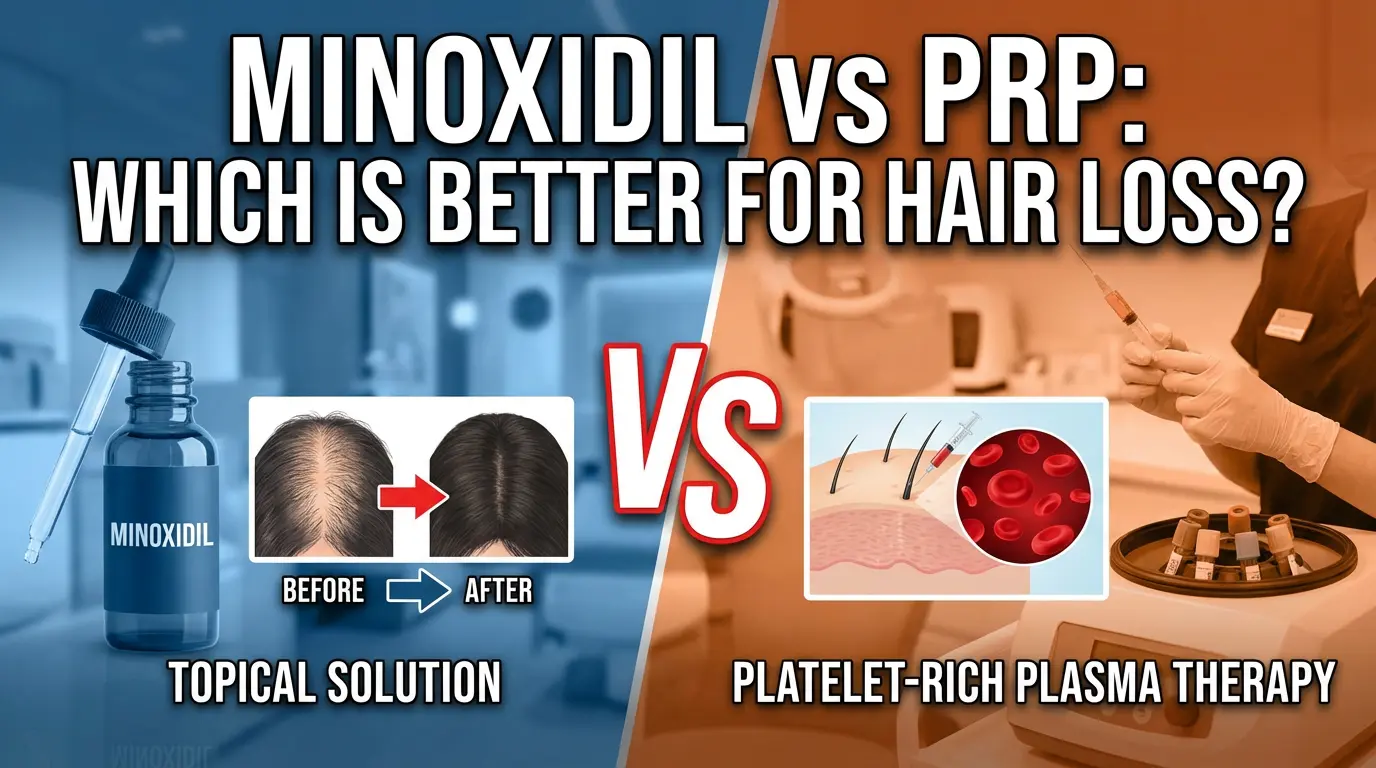
Hair loss is a progressive condition that affects both men and women at different stages of life. When people start researching treatment options, two of the most common solutions they encounter are Minoxidil and PRP (Platelet-Rich Plasma) therapy. Questions like “Is Minoxidil safe?”, “Do I need to use it forever?”, or “Is PRP only for celebrities?” are very common.
Scientific organizations such as the International Regenerative Medicine Association emphasize that hair loss treatment should follow a medical strategy, not random product use. Understanding how these treatments work can help you make the right decision for long-term hair health.
Understanding Minoxidil: Is It Safe and How Does It Work?
Minoxidil is one of the most researched and widely used treatments for hair loss. Originally developed for blood pressure, researchers discovered that it also stimulates hair growth. Today, it is an FDA-approved and clinically proven treatment with decades of scientific research and over 100 clinical studies supporting its safety and effectiveness.
How Minoxidil helps hair growth:
- Improves blood flow to hair follicles
- Increases oxygen and nutrient delivery to roots
- Strengthens weak follicles
- Extends the hair growth (anagen) phase
- Helps slow down hair thinning
It works best in areas where hair follicles are still alive but weakened. It cannot regrow hair in completely bald areas where follicles no longer exist.
How Long Do You Need to Use Minoxidil?
One of the most important facts to understand is that Minoxidil works only while you continue using it.
Key points to know:
- Results usually appear after 4–6 months
- Hair becomes thicker and stronger gradually
- If stopped, the benefits slowly reverse
- It is considered a long-term maintenance treatment
This does not mean it is unsafe—it simply means it supports follicles continuously, similar to how ongoing care supports overall health.
Some people may experience mild temporary effects such as:
- Scalp irritation
- Dryness
- Temporary shedding in early weeks
These effects are usually short-term and manageable.
What is PRP Therapy and How Does It Work?
PRP (Platelet-Rich Plasma) therapy is a regenerative treatment that uses your own blood to stimulate hair follicles.
The process involves:
- Drawing a small amount of your blood
- Processing it to extract growth factor-rich plasma
- Injecting it into the scalp
PRP contains powerful growth factors such as:
- Platelet-derived growth factors
- Vascular endothelial growth factors
- Transforming growth factors
These factors help repair weak follicles and improve hair thickness.
Regenerative medicine research, including studies referenced by the International Regenerative Medicine Association, shows that PRP supports follicle healing and improves hair density when used appropriately.
Is PRP Only for Celebrities?
No. PRP is a medical treatment available for anyone experiencing hair thinning. It is not limited to celebrities. However, it is important to understand that PRP is not a one-time solution.
Typical treatment schedule includes:
- 3–4 sessions initially
- Maintenance sessions every few months
- Gradual improvement over time
PRP works best in thinning areas where follicles still exist.
Minoxidil vs PRP: Key Differences Explained
Minoxidil
- Topical solution applied at home
- Improves blood circulation to follicles
- Cost-effective long-term treatment
- Requires consistent daily use
PRP Therapy
- Clinical procedure performed by specialists
- Uses regenerative growth factors
- Improves follicle strength and thickness
- Requires periodic sessions
Both treatments target follicle health but through different mechanisms.
Why Combination Therapy Often Gives Better Results
Scientific evidence shows that combining treatments can produce better outcomes than using only one method. Minoxidil improves blood supply, while PRP provides regenerative stimulation.
This combination helps:
- Improve follicle survival
- Increase hair thickness
- Slow hair loss progression
- Enhance overall scalp health
Hair restoration strategies supported by regenerative medicine research focus on strengthening follicles before considering surgical solutions.
Common Mistakes People Make During Hair Loss Treatment
Many individuals make errors that reduce treatment effectiveness, such as:
- Starting treatment without medical diagnosis
- Stopping Minoxidil too early
- Expecting instant results from PRP
- Ignoring nutritional deficiencies
- Following advice without professional guidance
Hair loss treatment must be personalized based on the stage and cause of hair loss.
Which Treatment is Right for You?
The best treatment depends on your hair loss stage:
- Early thinning: Minoxidil may be sufficient
- Moderate thinning: Combination therapy may help more
- Advanced hair loss: Additional medical or surgical options may be required
Proper diagnosis is essential before choosing any treatment.
The Importance of a Medical Strategy in Hair Loss Treatment
Hair loss is a medical condition influenced by genetics, hormones, nutrition, and scalp health. Modern treatment approaches focus on preserving existing follicles and improving their function.
Organizations like the International Regenerative Medicine Association emphasize evidence-based treatment protocols that combine medical therapy, regenerative treatments, and long-term follicle preservation.
Conclusion:
Minoxidil is a safe, proven, and effective treatment for maintaining and strengthening hair follicles, while PRP provides regenerative support that improves follicle health. These treatments are not competitors but complementary options in a complete hair restoration strategy.
The key to success is early intervention, proper diagnosis, and consistent treatment under professional guidance.